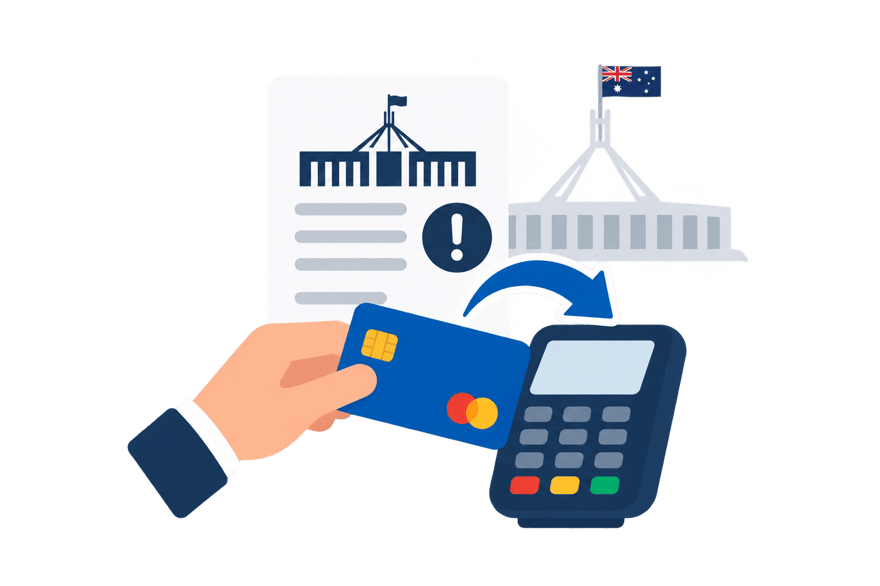
Paying a tax bill by credit card can bridge a timing gap. It can also hide a recurring shortfall. For GP contractors, locums and practice owners, the useful question is whether the next bill is already funded.
What has changed?
On 9 October 2026, the Government announced transitional funding so the ATO can continue accepting credit card payments until 30 June 2027. Its announced position is that credit cards will remain available through third-party providers after that date, alongside direct alternatives such as debit cards and bank transfers. Check the ATO’s current payment options before paying; third-party terms and costs vary.
Separate the tax reserve from money you can spend
When you move from employment into contracting, the amount reaching your bank account can feel like take-home pay. A better planning approach is to allocate receipts across practice costs, expected tax, personal commitments and reserves before deciding what is available for spending.
For a locum, this means allowing for gaps between engagements as well as busy months. For a practice owner, it means looking beyond the bank balance to upcoming payroll, supplier bills, debt repayments and tax obligations.
Is it a timing gap or a recurring deficit?
Consider two hypothetical situations. One doctor has cash reserved for tax but uses a card for a short, planned interval. Another puts each tax bill on a card because the cash has already been spent. The payment method is the same; the underlying problem is different.
Our suggested review is straightforward:
- Map the next 12 months of expected receipts and major payments, including planned leave.
- Reconcile the tax reserve against your latest forecast, allowing for instalments already paid.
- Identify the cash source and date for clearing the card balance.
- Check fees, interest and the card’s actual terms rather than assuming an interest-free period or rewards entitlement.
- Test what happens if receipts are delayed or a planned engagement falls through.
Make the change before it becomes urgent
A payment extension gives you time to improve the process. It does not resolve a spending pattern that repeatedly consumes the tax reserve.
If the next tax payment depends on your next busy month, contact Verity. We can review the interaction between your tax forecast, household drawings and borrowing commitments, then agree the work that would be helpful.